
Contractors and builders manage many moving parts every day. Leads come from websites, referrals, and construction content marketing. Projects move from estimate to signed contract to active build. Clients expect updates. Teams need clear communication. Without the right system, details get lost.
That is where CRM software for construction companies makes a real difference. A strong construction CRM system helps you track leads, manage contacts, schedule follow-ups, and connect sales with active jobs. The right builder CRM software turns scattered information into an organized process that supports growth.
Key Takeaways
- Construction CRM centralizes leads, contacts, and projects into a streamlined process
- Builder CRMs offer job tracking, lot management, and workflow automation for construction teams
- Choosing the right CRM depends on company size, project complexity, and software integrations
- Successful adoption requires clear processes, consistent data entry, and staff training
- Integrating CRM with construction marketing improves follow-ups, conversions, and growth
What Is a CRM and Why Builders Need One
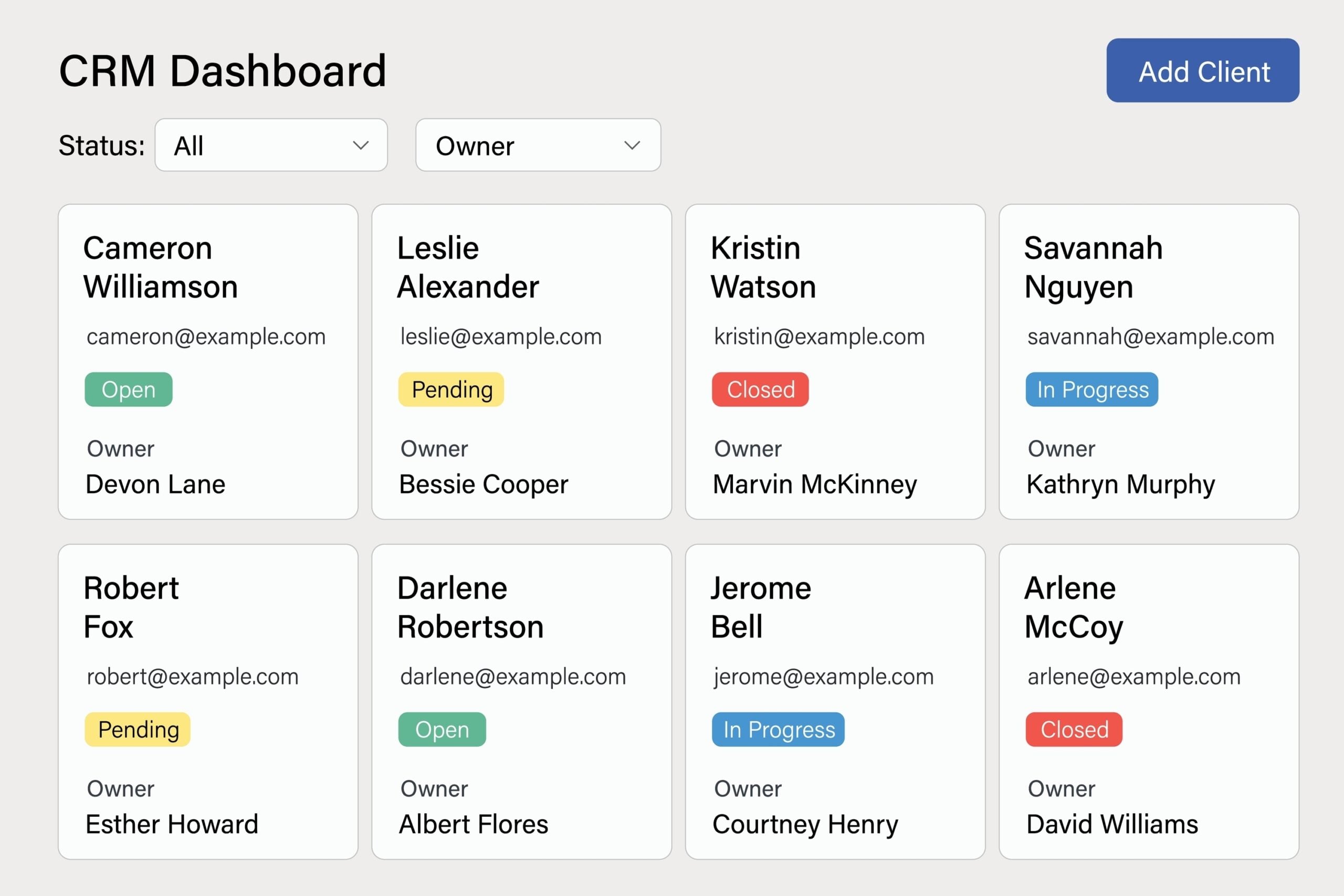
Example CRM dashboard showing client cards, lead tracking statuses, and analytics layout
A Customer Relationship Management (CRM) system is software designed to help businesses manage interactions with current and potential customers. It stores contacts, tracks leads, logs communications, and provides a clear view of the sales pipeline, making it easier for teams to stay organized, collaborate, and improve customer relationships.
CRMs are used across industries to streamline workflows, reduce missed opportunities, and enhance client experiences. For construction businesses, a CRM can also track project progress, connect marketing, sales, and production teams, and support construction content marketing by capturing leads from blogs, landing pages, and email campaigns.
Core Features of Construction CRM Software
Not all CRM tools are created equal, and construction teams have specific needs. The best construction CRM software includes features that match real-world workflows, supporting both sales and active projects without adding extra work.
Key capabilities often include lead management, project tracking, communication tools, reporting dashboards, and document storage. By selecting a system with the right features, builders can reduce manual tasks, improve team coordination, and keep information organized from the first inquiry to the final invoice.
Lead Management
A construction CRM helps capture leads from websites, referrals, and other sources, ensuring no opportunity is lost. It allows teams to assign follow-ups to the right person and track the status of each lead from initial inquiry to signed contract.
Project and Jobsite Tracking
CRM systems connect lead and client information to active projects, making it easy to assign team members, store notes, and track progress. This ensures everyone on the project has access to the most up-to-date information.
Communication Tools
Construction CRMs offer email templates, text reminders, and call tracking to streamline communication with clients and team members. These tools reduce missed messages and help maintain consistent, professional interactions.
Reporting and Dashboards
Robust reporting features provide visibility into the sales pipeline, revenue forecasting, and team performance. Dashboards consolidate key metrics, giving builders and leadership a clear picture of business progress and opportunities for improvement. Instead of relying on spreadsheets or scattered updates, teams can monitor real-time data in one centralized system.
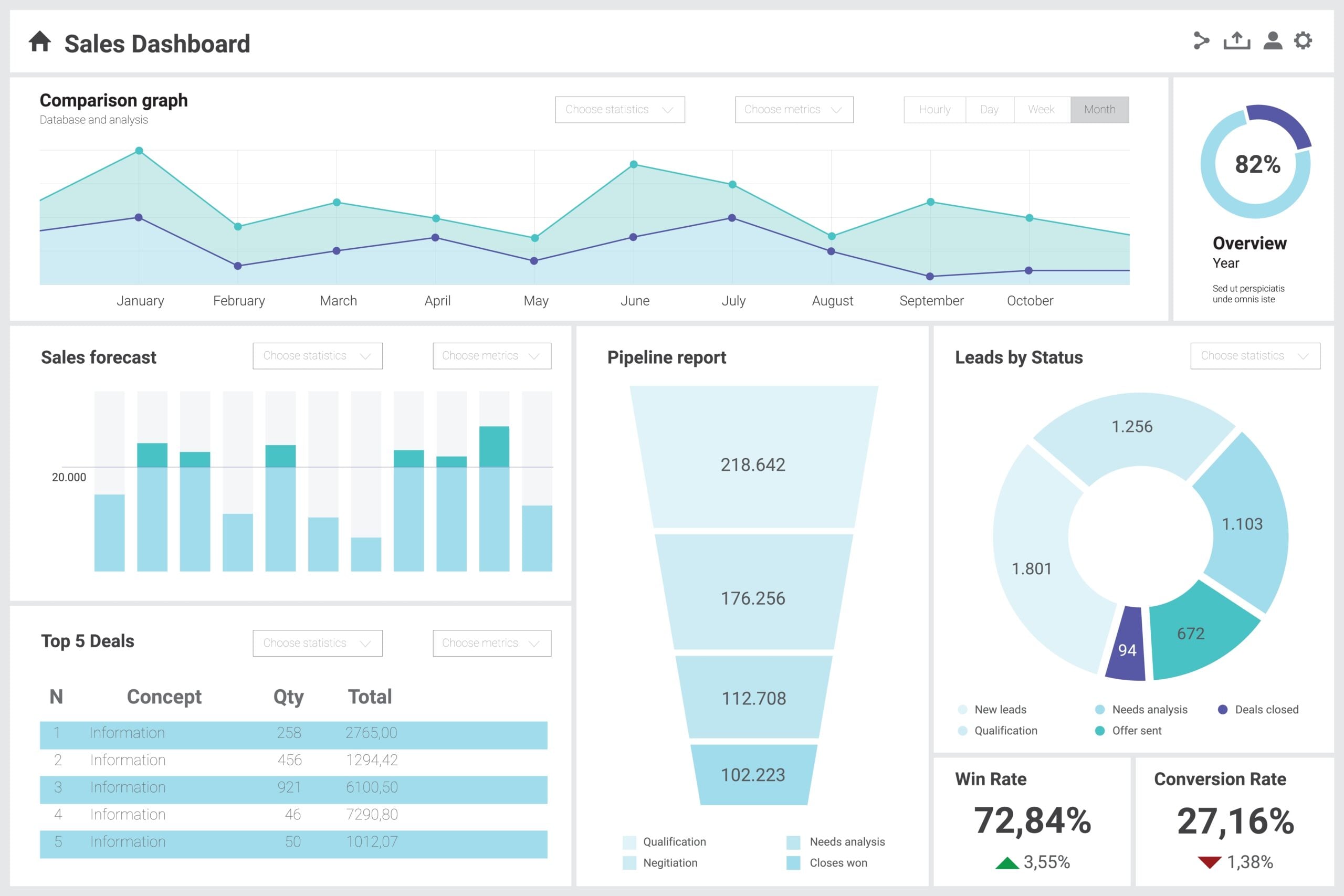
Visual analytics showing sales performance, pipeline forecast, and business insights for construction teams
The example above illustrates how CRM dashboards display sales performance, pipeline forecasts, and actionable business insights in a visual format. Clear charts and organized data make it easier to identify bottlenecks, track conversion rates, and plan upcoming projects with confidence.
Strong construction CRM software should support both sales and operations. It should connect your office team, field crews, and leadership so everyone works from the same information. When reporting tools align with daily workflows, decision-making becomes faster and more accurate across the entire organization.
General CRM vs Construction CRM Software
General CRM platforms are designed to serve many industries, offering standard features for sales and contact management. While they can track leads, store customer information, and manage communication, they often lack the specialized tools construction companies need. Builders face unique challenges, including long project timelines, multiple teams on different sites, subcontractor coordination, detailed estimates, and document management. That’s why many construction companies use CRMs built specifically for their industry. These systems include project tracking, workflow automation, lot management, and integration with accounting and scheduling tools. By connecting sales and operations, specialized CRMs reduce errors, improve collaboration, and support business growth.
Industry-specific builder CRM software often includes:
- Estimate tracking
- Workflow automation
- Job costing integrations
- Document management
For residential companies, home builder CRM software may also include tools designed for managing buyers and home projects. These features help track every step of the customer journey from lot selection to final walkthrough.
- Lot tracking
- Buyer journey tracking
- Plan and upgrade selections
Choosing the right type depends on your company size and project complexity. A small remodeling contractor may need simple lead tracking, while a large home builder may require advanced workflow and project management tools.
CRM Platform Comparison Table
Every platform has strengths and trade-offs. No single solution works for every contractor or builder. The right choice depends on your team size, workflow complexity, and long-term growth goals. Take time to compare features, pricing, and industry fit before making a decision.
| Platform | Best For | Strengths | Weaknesses | Ideal Use Case |
| HubSpot CRM | Small teams and startups | Easy setup, strong marketing tools, and user-friendly | Advanced features require upgrades | Builders starting structured lead tracking |
| Zoho CRM | Growing construction companies | High customization, strong integrations, and affordable | Setup can take time | Companies needing flexible workflows |
| Monday CRM | Collaboration-focused teams | Visual dashboards, task management, and strong team tools | Not construction-specific by default | Teams blending CRM and project tracking |
| Buildertrend | Residential builders & remodelers | Combines CRM with scheduling, budgeting, client communication, and project management | Higher cost and steeper learning curve | Companies that need both CRM and construction workflow tools |
This comparison makes it easier to evaluate crm software for builders and see which platform fits your workflow. A clear side-by-side view helps you choose a system that supports both daily operations and long-term growth.
How to Choose the Right CRM for Your Construction Business
Selecting the right CRM starts with understanding your workflow and business needs. The best system fits your team, not the other way around. Taking time to map out how leads move through your process ensures that the CRM aligns with real-world operations.
Here is a step-by-step process for finding the right CRM:
- Consider whether you are a small remodeler or a large home builder, and the number of active projects your team manages.
- Determine the typical length of your sales process to ensure the CRM can handle long or complex pipelines.
- Check if the CRM integrates with tools like accounting software, scheduling platforms, project management systems, and marketing applications.
- Look for mobile access, simple dashboards, and team training support to encourage smooth adoption.
- Compare monthly costs, expected productivity gains, and potential improvements in lead conversion.
A good construction CRM system connects sales, marketing, and operations while improving organization and follow-up. When chosen carefully, it helps your team track opportunities clearly, move prospects efficiently from estimate to contract, and support sustainable business growth.
Best Practices for Successful CRM Adoption
Software alone does not create results. How your team uses it matters most. Clear processes, consistent data entry, and leadership support make a big difference. When everyone understands the purpose of the system, adoption becomes smoother and more effective.
To ensure success, keep the following in mind:
- Set clear goals before implementation
- Train all team members
- Create standard data entry rules
- Use reports to improve follow-up
- Connect CRM insights to construction content marketing
Consistency builds long-term value. When your team uses the system the same way every day, results become predictable and easier to measure. Over time, small improvements in follow-up and organization lead to steady business growth.
CRM Software for Builders FAQs
What features should construction crm software have?
It should include lead tracking, contact management, and communication tools. Reporting dashboards and pipeline visibility help track opportunities. Project tracking features connect sales with active jobs.
Is home builder crm software different?
Yes, it is designed specifically for residential builders. It includes features like lot tracking, buyer journey management, and plan selection tools. These tools help manage projects from first inquiry to final handover.
Can CRM help with marketing?
Yes, a construction crm system tracks leads from marketing campaigns. It shows where leads come from and how they move through the pipeline. This helps improve follow-up and increase conversion rates.
Do small contractors benefit from CRM?
Yes, CRM helps small contractors stay organized and respond faster to leads. It reduces missed follow-ups and improves client communication. This leads to better efficiency and closed jobs.
How long does implantation take?
Basic CRM systems can be set up in a few days. More advanced construction crm software may take several weeks. The timeline depends on customization, integrations, and team training.
Maximize Your Construction Business with the Right CRM
A strong construction CRM system is more than just a contact database. It helps your construction company track leads, manage communication, and move projects from estimate to signed contract with better organization. When paired with clear workflows and consistent follow-up, crm software for construction companies improves visibility, response time, and close rates.
As a leading construction marketing agency, Construction Spike helps contractors combine builder crm software with smart construction content marketing strategies. We focus on how prospects search, compare, and choose contractors, then connect that marketing data directly into systems that support sales growth. Our approach ensures your marketing and CRM work together to create consistent, qualified opportunities.
Are you ready to strengthen your systems and scale your construction business with confidence? Contact us today to learn how the right crm software and marketing strategy can help you close more projects and grow sustainably.