

Construction buyers are researching solutions online earlier and more thoroughly than ever before. Industry studies consistently show that buyers complete roughly 57 to 70 percent of their research before ever speaking with a sales representative. By the time a contractor gets a call or email, the client has often already formed opinions, compared providers, and narrowed their options.
Thank you for reading this post, don't forget to subscribe!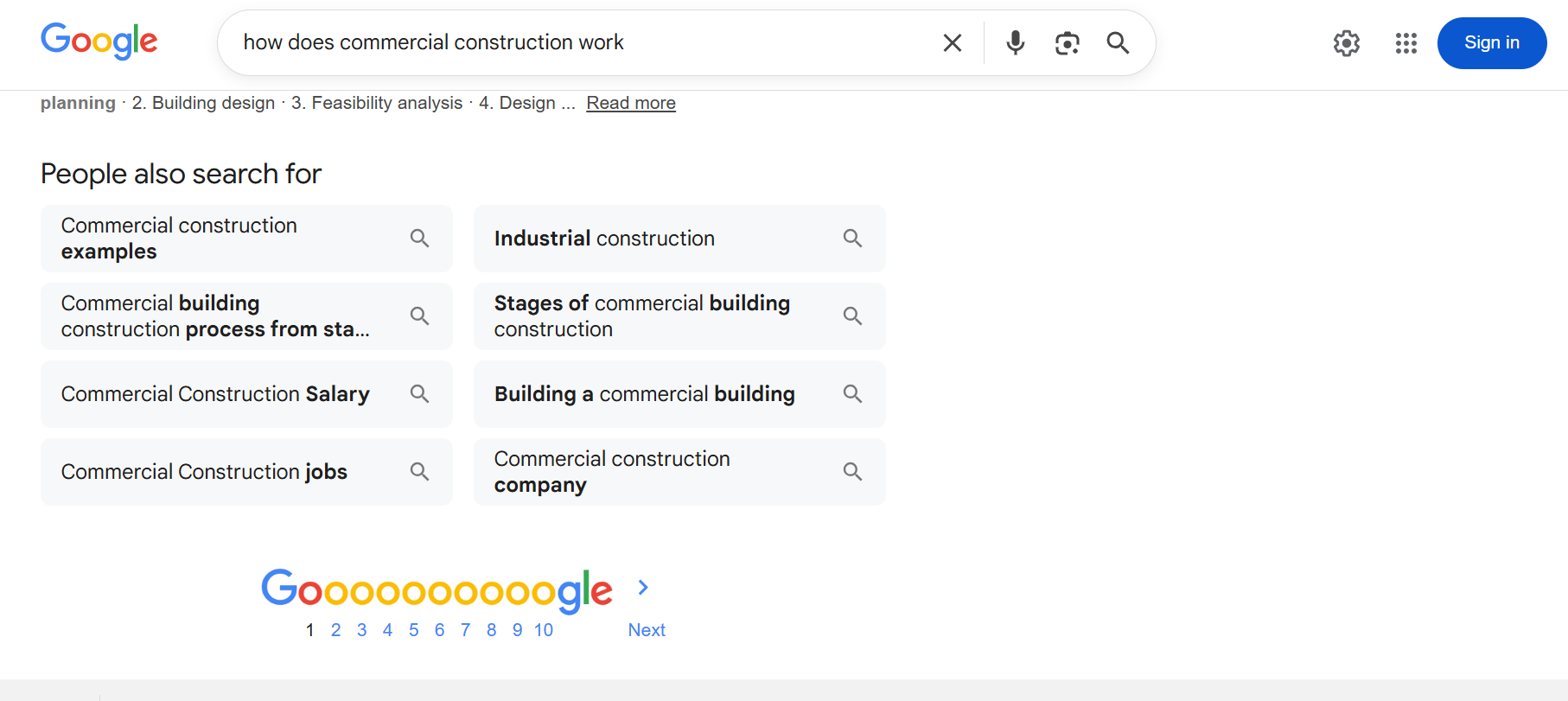
Google search results showing how construction buyers expand their research before contacting contractors.
In construction, these decisions are rarely simple. Projects involve large budgets, long timelines, and significant risk. Owners, developers, and project managers want confidence before they move forward. That is why visibility during the research phase matters so much.
Construction content marketing focuses on creating clear, relevant content that answers real questions, addresses common concerns, and positions your company as a trusted resource throughout the buying process. When done well, content helps potential clients understand your expertise long before they reach out.
A strong content strategy does more than increase website traffic. It creates meaningful touchpoints that build credibility with decision makers, aligns with how construction buyers search and evaluate options, and helps turn early interest into qualified leads and long-term clients.
Key Takeaways
- Buyers research extensively before contacting contractors; early visibility is critical
- Construction decisions are deliberate; content builds confidence
- Clear goals, audience understanding, and targeted keywords drive better results
- Case studies, guides, and testimonials strengthen credibility
- Consistent creation, measurement, and optimization provide long-term advantage
Why Content Strategy Matters for Construction Businesses
Content often represents a construction company’s first meaningful interaction with potential clients. Before a buyer requests a proposal or schedules a call, they are already evaluating your business. They look at how clearly you explain your services, how transparent your processes are, and whether your experience aligns with the scale and complexity of their project. Every piece of content, from a blog post to a case study, serves as a reflection of your expertise, professionalism, and reliability.
Unlike impulse-driven industries, construction decisions are deliberate, methodical, and risk-aware. Budgets are significant, timelines are long, and the stakes are high. Buyers are not simply seeking a contractor; they are seeking assurance that their project will be executed successfully.
High-quality content reduces uncertainty by providing clear, authoritative information long before any sales conversation begins. It answers common questions, anticipates concerns, and demonstrates competence, positioning your company as a trusted advisor rather than just a vendor. In doing so, content builds confidence, shortens the evaluation cycle, and increases the likelihood that buyers will choose your company when they are ready to engage.
Well-crafted content also reinforces your brand’s credibility over time. Every article, guide, or video strengthens familiarity, helping buyers feel informed and secure. This consistent presence supports decision-making and differentiates your company in a competitive market where trust is often the deciding factor.
The Unique Buying Journey of Construction Clients
The buying journey of construction clients is rarely straightforward. Clients do not move in a straight line from search to contract. Instead, they cycle between research, evaluation, and internal discussion. Each decision often involves multiple stakeholders, each with different priorities.
- A project manager may focus on timelines and execution.
- An owner may prioritize return on investment.
- A compliance officer may check permits and safety standards.
Understanding these different perspectives is essential when creating content that resonates with all decision-makers.
Content serves as a constant guide throughout this journey. At the early research stage, blog posts and how-to guides help clients understand processes, regulations, and project requirements. Case studies and project profiles provide practical examples that show how similar challenges have been successfully handled. Videos and site walkthroughs give a visual, tangible sense of your team’s capabilities.
Consider this as building a content ecosystem:
- Informational content addresses early questions.
- Proof-based content, such as case studies or testimonials, validates expertise.
- Engagement content like videos or interactive guides keeps prospects invested.
At each stage, content reduces uncertainty. Early-stage content answers questions before they are asked. Mid-stage content reassures decision-makers that your team can deliver. Later-stage content provides concrete proof that you are the right choice.
Consistency is crucial. By showing up at every stage of the buyer journey, your company builds credibility and familiarity. When clients encounter challenges or questions, your content becomes the reference point they return to. Over time, this familiarity not only shortens evaluation cycles but also positions your company as a trusted partner, rather than just another contractor.
How Search Behavior Drives Project Decisions
Search behavior reveals where clients are in the decision-making process. When someone searches for construction-related topics, they are often actively planning a project, comparing options, or validating next steps. These moments provide an opportunity to position your business as part of the decision-making process rather than simply responding to bids.
For example, a project manager searching for “commercial renovation cost estimates” or “building permit requirements in Texas” is gathering information to guide internal decisions. Appearing in these searches with relevant content shows expertise and builds trust early.
Relying solely on referrals can leave these opportunities untapped. Companies with strong content strategies capture demand before competitors are considered, educating potential clients and reinforcing credibility.
Effective construction content aligns with search intent. Early-stage searches benefit from educational guides, mid-stage searches from case studies, and late-stage searches from testimonials or portfolio highlights. Structuring content to match these stages ensures your company is relevant and helpful at every step of the buyer journey.
The Role of Content in Building Trust and Credibility
Trust is earned through repetition and clarity. Clients who repeatedly find accurate, helpful information associated with your brand gain confidence in your expertise. Over time, content establishes familiarity, reduces perceived risk, and shortens the path to inquiry.
Set Clear Goals for Your Construction Content Marketing
Without defined goals, content becomes reactive: one post answers a question, another promotes a service, and over time, strategy loses focus. Clear objectives create alignment between marketing, sales, and leadership.
| Goal Type | Description | Example Metrics |
| Lead Generation | Attract qualified prospects | Contact form submissions, calls, and quote requests |
| Brand Authority | Demonstrate expertise | Blog engagement, shares, backlinks |
| Education | Inform buyers about processes & expectations | Page time, content downloads, guide completions |
| Sales Enablement | Reduce time spent answering basic questions | Fewer repetitive emails/calls, faster proposal approvals |
Define What Success Looks Like
Success in construction content marketing is tied to tangible outcomes. Metrics may include:
- Inquiries from qualified prospects
- Leads that are better educated are entering the sales process
- Reduced time spent explaining basics during calls
- Increased trust before proposals are reviewed
Defining success ensures content is created with purpose, supporting measurable outcomes rather than arbitrary engagement metrics.
Align Content Goals with Business Objectives
Content should mirror business priorities. If your company is expanding into new services or markets, content can introduce capabilities, explain processes, and address concerns. Alignment ensures content functions as a growth lever, not merely a marketing exercise.
Key Performance Indicators to Track
Tracking performance provides actionable insight. Metrics include:
- Organic search traffic
- Lead form submissions and conversions
- Engagement metrics like time on page and bounce rate
- Assisted conversions across multiple touchpoints
Regular review helps prioritize updates, retire underperforming content, and identify high-impact topics.
Identify Your Target Audience
Construction content is most effective when tailored to specific roles and needs, rather than a general audience.
| Audience Segment | Role | Key Concerns | Content Focus |
| Owners | ROI and budget | Long-term investment, cost savings | Case studies, ROI calculators |
| Developers | Compliance & timelines | Permits, scheduling, coordination | Project guides, timelines |
| Project Managers | Execution & coordination | Process, contractors, risk | How-to guides, project breakdowns |
| Facilities Managers | Disruption & maintenance | Site impact, safety | Educational content, operational tips |
Segmenting by Project Type, Budget, and Pain Points
Segmentation ensures your content resonates with the right audience. Differentiate by:
- Commercial vs. residential projects
- Ground-up construction vs. renovations
- Budget size and complexity
- Common challenges, such as permits, safety, or cost management
Specificity separates average content from high-performing, conversion-driven content.
How Audience Insight Informs Content Topics
The best topics often originate from internal expertise. Sales calls, project meetings, and client questions reveal recurring themes. Turning these insights into content ensures authenticity, relevance, and usefulness.
Keyword Research for Construction Content Marketing
Keyword research is the foundation of effective construction content marketing because it connects industry expertise with how real clients search online. It begins with identifying keywords related to services, pricing, materials, and timelines that reflect common project concerns. These terms reveal what potential clients want to understand before reaching out to a contractor.
The next step is understanding intent. Some searches indicate early research, while others signal readiness to hire, such as queries focused on finding the best contractor for a specific project. Recognizing this difference helps shape content that meets prospects at the right stage of their decision-making process.
Finally, keyword prioritization ensures content supports business goals and market demand. High-intent, service-focused keywords are given precedence because they attract qualified prospects who are closer to taking action. When approached thoughtfully, keyword research helps construction firms create content that is visible, relevant, and aligned with real purchasing behavior.
Content Types That Work for Construction Clients
No single content format serves every stage of the construction buyer journey effectively. Decision-making in construction is rarely impulsive. Owners, developers, and facility managers often spend weeks or months researching costs, timelines, risks, and contractor qualifications before initiating contact. A strong content strategy reflects this reality by using multiple formats to support buyers as their needs shift from education to evaluation to trust.
Early in the process, prospects are focused on understanding the fundamentals. They want clear explanations of how projects work, what factors influence pricing, and what risks to plan for. Educational content plays a critical role here by answering common questions and reducing uncertainty. Well-researched articles and guides demonstrate practical experience and industry knowledge, signaling that the firm understands real-world project challenges, not just marketing language.
As buyers move closer to a decision, credibility becomes more important than visibility. At this stage, content must show evidence of performance, not just expertise. Case studies, project breakdowns, and visual documentation help prospects evaluate whether a contractor can deliver under real conditions. Proof-based content bridges the gap between research and trust by showing how problems were solved, timelines were managed, and expectations were met.
Different content formats support this progression in distinct but complementary ways:
- Blog posts address recurring client questions, clarify industry terminology, and capture organic search traffic. When written from hands-on experience, they establish authority while remaining accessible.
- Case studies demonstrate applied expertise by detailing project constraints, decision points, and outcomes. They provide context that helps prospects assess fit and capability.
- How-to guides and educational resources explain processes such as permitting, budgeting, or material selection. This content reduces friction by helping buyers make informed decisions with confidence.
- Video content and site walkthroughs offer transparency and realism. Seeing active job sites or completed work helps validate claims and builds familiarity before direct engagement.
- Testimonials and proof of performance reinforce trust at the final stage. Client feedback and documented results reduce perceived risk and support decision-making.
When these formats are used together, they create a content ecosystem that reflects how construction decisions are actually made. Instead of relying on a single channel or content type, firms that invest in experience-driven, evidence-backed content are better positioned to earn trust, support informed decisions, and attract qualified leads.
FAQs About Construction Content Marketing
Why is content marketing important for construction companies today?
Construction buyers research extensively before contacting a contractor, often forming opinions and shortlists on their own. Content marketing ensures your company is visible during this early research phase, helping build trust, demonstrate expertise, and influence decisions before direct contact begins.
How does construction content marketing help build trust with potential clients?
High-quality content answers common questions, explains processes clearly, and showcases real experience through case studies and examples. This transparency reduces uncertainty, positions your company as a knowledgeable advisor, and builds confidence long before a proposal is requested.
What types of content work best for construction buyers?
Educational blog posts, how-to guides, and industry explainers support early research, while case studies, project profiles, videos, and testimonials build credibility during evaluation. Together, these formats guide buyers from initial interest to confident decision-making.
How does understanding the construction buyer journey improve content results?
Construction decisions involve multiple stakeholders and stages of evaluation. Tailoring content to owners, developers, and project managers at each stage ensures relevance, addresses specific concerns, and keeps your company top of mind throughout the buying process.
How does search behavior influence construction project decisions?
Search queries reveal buyer intent, whether clients are researching costs, compliance, timelines, or contractor options. Content aligned with these searches allows your company to appear early, educate prospects, and become part of the decision process before competitors are contacted.
Building a Content Strategy That Works
Building an effective content strategy turns a construction website into more than an online brochure. With clear goals, a defined audience, informed keyword research, and relevant content, construction companies can engage prospects throughout the decision-making process. Each piece of content serves as a strategic touchpoint, building credibility, reinforcing expertise, and guiding early interest toward qualified leads.

Overview of how Construction Spike’s digital marketing services help construction businesses grow their online presence.
As a construction-focused content marketing partner, Construction Spike emphasizes consistency, performance tracking, and ongoing optimization. Regular publishing, engagement analysis, and refinement ensure content stays aligned with both client needs and business objectives. This disciplined approach strengthens visibility, builds authority over time, and helps shorten sales cycles by supporting more informed, confident buyers.
Looking to attract the right clients and generate measurable growth? Contact us today to start building a content strategy that supports long-term growth and positions your business as a trusted industry authority.

Sabeeha Banu is a Content Writer at ITVibes, Inc., focused on writing clear and engaging content. She holds a Bachelor’s degree in Computer Science and brings a practical yet creative approach to her work. A lifelong learner and poet at heart, she enjoys crafting simple, meaningful stories inspired by everyday moments.